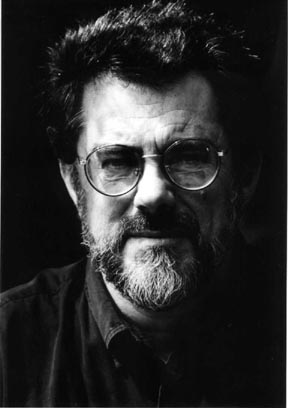
A Story of coming to Zen
Center from Daniel Abdal-Hayy Moore
Daniel's cuke page
 click
on image to enlarge
click
on image to enlarge
Thanks for the photo Daniel.-DC
Zen Recollections
by Daniel Abdal-Hayy Moore
Chapter 1
I’d met Norman Stiegelmeyer (God rest his pure sweet soul) at the San
Francisco Art Institute. He was a wild painter then, thick impasto human
figures like the ones Gully Jimson painted in the movie "The Horse’s
Mouth," all writhing in great ascending or descending swirls with
lots of strong blues and reds in a cross between anguish and ecstasy,
extremely passionate and sexually charged, and I was also studying
painting, but mostly writing the surreally imagistic poems for Dawn
Visions inspired by a sojourn in Mexico, later published by City
Lights (1964).
It was a glorious afternoon on the California coast, Bolinas, right on
the lagoon, light glinting off the lagoon water where I saw cranes fishing
and night herons sailing into the twilight, and now he was standing with
me at the edge of the lagoon excitedly telling me about Zen. I had been
living in Bolinas (above San Francisco and Stinson Beach) in a little
tutor’s cottage on the woodsy summer-house grounds of the Kent Estate. I
had won the Ina Coolbrith Award from UC Berkeley for a poetry manuscript
in progress ($1000, which was about a year’s worth of scrupulous and
frugal living for one person then, around 1963), and spent my time walking
with my cat in the hills above the lagoon, writing, reading, and doing odd
jobs for extra cash.
It was obvious that Norman had been bitten hard by the Zen bug, and he
was standing there telling me all about it, in ecstasies himself, and
about this very real Zen Master, Suzuki Roshi, who he said was stern but
gentle, and who was a truly enlightened human being, a real bona fide
Zen Master, not an historical relic, but living and teaching in San
Francisco! Here was this ex-sailor (he once told me he’d woken up in the
garden of a Zen monastery after a heavy bender in Japan while in the Navy
and that the sound of the dripping water was so calming and the garden so
peaceful and beautiful that he’d decided then and there to check out Zen…),
lanky and intense, selling me on Zen (later Suzuki gave a wonderful
lecture about not selling alcohol, and interpreting it to mean not
preaching the Zen pitch), but it sank in. "It’s better than
drugs," he said, "it’s the real thing!" I said,
"Yes, it sounds great," and saw how it had inspired Norman and
gave his energies, which were overpowering to the point I occasionally
feared he might explode into hurling particles, new and centered focus.
Which only gave those energies more clarity, and ultimately even more
power, but a "power" that could mold crystal rather than mow
down armies. And shelved the pursuit of Zen in the back of my mind to
check out next time I was in San Francisco.
I had read some Zen texts, certainly encountered a kind of overexcited
Buddhism already in the writings of Kerouac and Ginsberg, possibly Snyder
too (his more contained and scholarly, though no less spontaneous), they
all had a thirst for Zen pithiness, Zen absolutism, Buddhist devotions,
and great Zen thoughts about eternity. I knew Michael McClure, who lived
in an apartment in the Haight Ashbery district before it became a
psychedelic Valhalla, and saw in him a superhero of visionary experiences,
a slender and moving pillar of light himself, my girl friend and I sort of
having an audience with him in his room the first time I met him, he lying
in an inspired state on a bed covered with white bear skin, in a room that
seemed like a globe balanced delicately on the head of a pin. I had taken
peyote with her, this girlfriend from UC Berkeley days (Yvonne Bond, where
are you?), had cosmic visions along with the rest of them, saw the great
green wonders of mysterious nature firsthand, watched water currents curl
together and slash the rocks of the Pacific coast with photo-realistic
lacy spume which seemed to hang suspended in the air, believed in Nirvana,
Satori, Enlightenment, and had glimmerings of same, though chemically
induced. In the 50s I had watched Alan Watts on black & white TV
explaining Zen in his clipped and peculiar English accent, and was always
fascinated by it as well as by him, the one-time Episcopalian minister
become a Zen Buddhist! I think I had a copy of the teachings of Huang Po
published by Evergreen books, a kind of 60s bible among some, and being a
Californian, maybe already a kind of taste for the atmosphere at least of
Zen (being closest to Japan, and, of course, final victors in the war, I
grew up with some items of Japanese aesthetic in our living décor. An
interior decorator had chosen two very fine Japanese rice paper ink
paintings to put in our family living room, an old sage with a crooked
staff and small deer at his side, a goddess wrapped in ribbony clouds
carrying some kind of talisman, and they always impressed me…). I wasn’t
numb to Norman’s excitement, nor to the idea of Zen per se.
The following year, perhaps (maybe earlier), I moved to San Francisco
with my then-mate Gail Varsi (later married in the Zen Center, a story to
follow, God willing…) and lived in a carriage house behind a house off
Divisidero, not far from the then Zen Center on Bush Street. Norman lived
somewhere near North Beach, I think. Anyway, I decided, in the lovely
pot-smoke openness of the time, to go to a Zazen session with Norman (I
faintly recollect), and so crossed Geary at a bleary time in the AM, far
too early normally for me, to meet him at the door, and together we
entered the Zen Center.
I can’t say that I remember my first impression. I had sat a few
times on my own, coached by Norman, and the incense and the sweet and
silent atmosphere of the Zendo seemed perfectly natural to me. I flowed
into it. I faced the wall and crossed my legs. But just now I do remember
Suzuki passing behind me during that first sitting in Zazen, I could sort
of hear his feet and his nostrils breathing, and knew that he had a stick
in his hand and I had read about Zen Masters bashing their students, and
wondered if I was in for it or whether he would pass by, and I would
continue sitting unbashed. I probably also thought, by then, that I was
more or less enlightened already (had I not had various epiphanies in
Golden Gate Park, late at night, my eyes and mind filled with a chemical
radiance?). I wondered if he could tell. Could he see deeply into my
thoughts with his enlightened mind, would he recognize my already
well-established visionary plateaus? I think he paused. There was a moment
when I could feel him behind me. This was it. He would be amazed. This
would be the dreamed-of meeting of millennia of wisdom, etc. (though my
ego wasn’t a particularly aggressive one, it was nevertheless, in its
own realm, romantically inflated). I waited. Suddenly I could feel his
hand on the small of my back, gently but firmly, and on my shoulder kind
of pulling me up, and he passed on, no stick on the head (which is what I
thought might happen… an erroneous impression anyway), he had just
stopped, straightened my back, helped me sit properly and passed on. His
touch was electric. I sat straighter, disappointed it had not been more
dramatic, but realizing in some small way then that Zen wasn’t just
whatever you wanted it to be. I think I got an inkling from his touch,
that he straightened me up rather than acknowledged what a great student I
was, great poet, great whatever... It was all very plain, straightforward
and simple, a discipline after all—Zen was tougher than I had dreamed.
Sitting straight and following your breathing and not getting nervous or
agitated or restless, facing that blank wall, the brown wooden walls of
the Zendo, wasn’t just an idea of enlightenment. It was going to be
work. The severity seemed both formidable and humanly do-able, a challenge
but also a matter of daily doing, and the idea of the sparkling and
blissful dimension of enlightenment was worth all the effort it would take…
To live among the Buddhas, past and present, to consort with masters and
Zen poets smiling in their tattered robes on the edges of cliffs… to
sail through the domains of Nirvana… all seemed possible and this was
where it could happen. After all, some of the older students, who had been
there studying and practicing Zen with Suzuki for some time, seemed very
smiling and kindly, actually already glittery-eyed and attentive, and part
of the very serious undertaking at hand, submitting to its rigors. But
they seemed to be taking it well, it wasn’t torture. It was practice.
The practice for Supreme Enlightenment.
We ended with the sound of the bell. We bowed (I don’t know how I
knew what to do… I think someone showed me the basics, but can’t
recall exactly who…), and left the Zendo. I was now a Zen student. I
walked home in the early morning very elated and refreshed, and part of a
tradition that seemed to promise success. It had been around for
centuries, and here were living practitioners, not least of whom was
Suzuki Roshi himself.
I started attending the Wednesday night lectures. I read the Wind Bell.
I went to meditation almost every morning for quite a while. I polished
the banisters and swept the hall. I read Zen. I burned incense at home. I
had my own thick stuffed black Zen pillow, and sat at home as well. I
smoked a joint, and sat. I got good at sitting. And although I don’t
claim to have really known a hornet’s stinger about what Zen was really
all about, attending the lectures and listening to Sensei Suzuki explain
in his then very halting but always expressive English, with his long
pauses, his sweet moonlike face with its plain but sunny expression, and
the general feeling that we were all in on a great secret, made it seem
that Zen was really possible in San Francisco, circa 1963-1964.