Emma Bragdon
Founder/Director of the Integrative Mental Health University, IMHU.
IMHU.org includes a recent bio and story of why she started this online University. From this site: Emma Bragdon, PhD is an integrative therapist and coach, the founder and co-Executive Director of Integrative Mental Health University and the Foundation for Energy Therapies, Inc. Along with invited faculty, she facilitates a series of courses on the bio-psycho-social&spiritual paradigm of care. She trains and certifies “Spiritual Emergence Coaches®” who can then give appropriate support to individuals distressed by phenomena associated with spiritual awakening. Books by Emma Bragdon - can be found on Amazon Link to personal consultations: Spiritual Alliances & EmmaBragdon.com Spiritism: Bridging Spirituality and Health one of two documentary films co-produced by Emma Bragdon. Short YouTube interview with Robert Whitaker, Award Winning Author of Anatomy of an Epidemic, who dispels myths about the long-term effects of psychiatric medications. Emma was known as Emmy Bragdon when she was at the SFZC. She and Tim Buckley became a couple in 1967, not long after she became a student of Suzuki. Katagiri married them in 1970 in a Zen ceremony and then Harry Roberts married them in a private ceremony that same day. It happened up the coast by the Russian River. I was there. It was great - Harry grilled a bunch of salmon. There was a band and when Emma invited Katagiri to dance with her—he said it was the first time he had ever danced. She writes about it below. Lots of good stuff. – dc I played such a small role and have felt it to be insignificant in comparison to the commitment others made to SF-ZC. However, I gained a vast amount from being part of the group and feel immensely fortunate to have been at Tassajara in the early days.
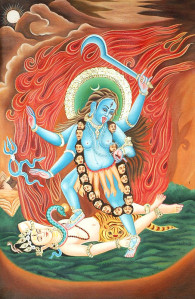
I was 20 years old when I first came to ZC in 1967 and I came to Tassajara, before becoming acquainted with SF-ZC. It happened as I was living in Berkeley at the time and I was encouraged by Mel Weitsman to visit Tassajara for a weekend. Once I got there, I didn’t want to leave. It felt like the home I had been looking for all my life. The people, you included, David, felt like family that was closer to my heart of hearts than my biological family. It certainly confirmed for me where I would need to look to find birds of a feather. From Emma's book, The Call of Spiritual Emergency: From Personal Crisis to Personal Transformation (2nd edition, 2013),updated and edited by Emma in 2026 I have known of people who have suicided as a result of being isolated and overwhelmed with spiritual experiences. This may have happened to my mother. When I was seven months pregnant in 1971, I received word that my mother had died by suicide. Obsessive thoughts of suicide can prevail in situations where individuals have consciously engaged themselves with spiritual practices or spontaneously entered into spiritual phenomena, e.g. Near-Death Experience. Some desperately want to be released from ego attachments, to end the life of duality, of see-sawing back and forth through good and bad times. My mother was certainly an example of this. Through her own meditation practice of a few years, although new to it, she began to see the light at the end of the tunnel—the enlightened mind was dawning in her. This made her even more poignantly aware of her limitations due to social conventions. Like many practitioners, she longed to resolve the conflict between responding to the needs of her family and community and following her inner path to complete liberation. I wondered, “Did she feel the bondage to social convention was too strong to overcome? Was she deluded by her passion to be liberated?”. It took me decades of deep study to come to my conclusions about what had happened with her. Less than two months after my mother’s passing, I gave birth to a beautiful boy. Within the next twelve months, there were others close to me who passed: Suzuki Roshi (leukemia), my employer (suicide), and my sister-in-law and her husband (killed by a drunk driver). Then I had a miscarriage, my father's companion died (overdose of drugs for heart disease), and then my father died (complications of alcoholism). My husband, Tim Buckley, and I could not weather the stresses of this time being supportive of each other, so we separated. Our divorce came shortly thereafter. *** Spiritual Emergence: My Story Even though my life has at times been very challenging, disturbing and confusing, I have never confused my own spiritual awakening, aka emergence, with mental illness, nor has anyone else. I believe this is because of the excellent guidance I received from Suzuki and other teachers I have had—as well as my study of texts that began at age 18, and the benefits of spiritual community, such as SF Zen Center. So, my journey depicts a spiritual emergence process that has not included a severely debilitating spiritual emergency. I never had a crisis that incapacitated me for a period of more than a few moments. Still, after each of my intense awakenings I have felt disoriented, alone, and often fearful as I tried to integrate the experiences into my life in a culture which does not yet full validate spiritual awakening or phenomena that may arise. When I was still very young, at eighteen, I met the psychologist and Zen teacher Graf Karlfried von Durkheim, who modeled for me how to hold ordinary reality simultaneously with the extraordinary spiritual dimension, and thus to integrate the two. He was an intuitive, a meditator, a man of God, and an author (Hara: The Vital Center in Man). People who were lost or wanted assistance in their personal development came to him for guidance. He had them meditate, and he gave them therapy. He helped them integrate their spiritual experiences into their lives. Within two years, I met several other teachers of this type. In fact, at twenty, I transformed my life: I went from being an art student to being a Zen Buddhist “nun”, just so I would have more access to teachers who would help me learn how to dovetail my ordinary consciousness with my expanding awareness of spiritual dimensions. I was intent on learning this. While following a monastic lifestyle at Tassajara, I felt at home in this world. For the first time I felt I could live out my private life and my innermost longings. Tassajara Zen Mountain Monastery, nestled in the mountains behind Big Sur in California, was also the first place I met a group of people my age who were like myself and had similar values. I could sense the longing they had, which matched my own: We all wanted to return to who we were in essence, to liberate ourselves from the attitudes and concepts of the collective society around us. We were all trying to get away from the deep pain we had seen in our parents and extended families, i.e. what they had experienced through World War II, or their personal lives that included their depression and alcoholism. We were all dedicated to finding a way to live on this planet that would not generate war, depression and addictions. During intensives we rose at 4:30 a.m. for morning meditation. We went down to the meditation hall, an all-stone building with no heat. It was below freezing most mornings. We sat on our meditation cushions in long rows, facing the wall. We sat zazen for forty minutes, trying to remain totally still to improve our concentration, to align with our will to see through suffering. Several times during the day we repeated the Boddhisattva vow outloud together: “Sentient beings are countless I vow to save them all. (*Levels of truth.) We were practicing an Eastern form of meditation based upon the teachings of the Buddha. Although most of us at Tassajara had grown up in Christian or Jewish families, none of us had found satisfactory ways in our churches or synagogues that offered direct access to the experience of Truth. After forty minutes, we had a walking meditation for five minutes, then sat again for forty. This was followed by a study period in the dining hall, then a return to the meditation hall for twenty minutes of chanting and breakfast in silence. The day proceeded ritually, with work, meditation before lunch, chanting, lunch as a meditation in a ritual form, a short break, work, bath, chanting before dinner, dinner in ritual form, a break, then either a lecture or more meditation. This was the measure of our days. I was twenty-one years old at the time I did this 3-month intensive. To have the privilege of joining this life, I was asked to show my commitment in the traditional way. I was to sit continuously for five days, rising from my meditation only for chanting while standing and meals while sitting, a bathroom break, or to sleep at the scheduled time at night. During these five days, through the chill of the morning and the 90° heat of the afternoon, the flies crawling over my lips, the devastating aching in my knees, I reached depths of despair and heights of ecstasy. My feelings covered a vast territory: anger, rage, sadness, helplessness, power, joy, hysteria, peace, love, gratitude, longing, satisfaction, fear, courage, willfulness, surrender, excitement, boredom, endurance, ease. I would never be able to blame another person for being responsible for these feelings—they were all within me, just waiting to burst out in some rhythm, often unpredictably. Accompanying this roller coaster of feeling were body sensations that were wholly new to me. As I relaxed deeper into my experience of my true self, the tensions that had held me captive as I tried to fit the mold of who I should be to fit into the collective world began to release. Suddenly my body would begin to shake, as if my spine were a whip in the hand of some invisible force. I would bounce and shake as if I were astride a wild bull. Afterward I would feel a calm, a sense of being more whole and closer to my essence. Somehow my body knew how to shake me in order to return me to who I was, to unbind me from the rigid conditioning that had confined my body as well as my thoughts and my feelings. So, the five-day meditation was one of the greatest gifts I had ever received. It taught me that my own body was a guide to my essential self. It taught me that I am not only a sensitive receiver, responding to the stimulation of others, but an organism looking for ways to express itself with authenticity. The meditation helped me to study the action of my inner life, which seemed to move from high drama to undisturbed quiet, notwithstanding that no "thing" was happening to me; I was just sitting there. One of the other gifts I received during my time at Tassajara was the opportunity to make the acquaintance of a wise old man. When Lama Govinda arrived for a visit, I had no doubt that he personified wisdom and compassion; he had the regal quality of someone who had attained those human virtues and carried them gracefully. When he stepped out of the car, he put on his tall, maroon mitered Lama's hat. He was wearing a matching long maroon robe. His white beard gently fell to the top of his chest. His face was lined with the deep marks of age. His eyes bestowed a depth I had never seen in a human being. In them were the worlds I longed for and somehow identified with. In them were his travels to Tibet, his training as a Lama, his research as a scholar, his isolated hours as a writer. I was lucky enough to be chosen to attend him and his wife during their stay. Through Lama Govinda, Suzuki Roshi, and the other teachers who came to stay at Tassajara, I realized that wisdom and compassion could be manifest in the world today, in this technological wasteland where people hardly meet, much less commune with each other. I soon let go of thinking of questions to ask my teachers to show I was not crazy or to demonstrate how I understood the teachings we studied. I knew that my task now was to continue my meditation practice, to focus on the teachings, and to do my inner work. I felt I could trust these to further enlighten me, deepen my sense of Truth. Again, I was fortunate. I was in contact with a community of people who gave me their friendship and their support. Our mutual companionship shielded us from the devastating loneliness that is often part of the path toward wholeness. The Buddhist texts we were reading gave us a conceptual framework within which to place our experiences. The simple tasks—keeping warm, cooking, gardening, and building in a natural environment—helped keep us grounded in the physical world. Still, it was not always easy to gracefully interweave the ordinary and extraordinary worlds. It was also not a place to be dating! We were all supposed to be practicing silence. Still, Tim Buckley and I did discover edges of the day to be private together and connect with some intimacy. But, there was no time for deep conversations, learning about each other’s pasts, comparing our aspirations for the future. Some of the phenomena that monastic life utilized to teach me about the nature of existence were astonishing. One early morning, during study period, one of the more verbal monks stood up to talk to the group. I looked up at him and suddenly saw right through him. Literally—as if his cells had dispersed into thin air. I could see the table and chair and the wall behind him. No vestige of him remained. Then, within a few seconds, he again appeared in my field of vision. I could no longer see behind him. This made me realize the power of the mind to create a consensual reality and move beyond it! Plato was correct. We live in darkness in our ordinary consciousness. If we are fortunate enough to find some true light at all, we may be able to see, only briefly, a reflection of the real truth. Sometimes my experiences were frightening. One night after evening meditation, I was walking alone up the valley a short way from my cabin. Suddenly, I sensed what I can only call the roar of the universe. I heard it not with my normal hearing, but inside my head, to the point where I felt deafened in every cell of my body. Dimensions of sound that I had never heard before pressed in on me as if my whole body were an eardrum. I was terrified. I felt very alone and small. Words cannot describe this experience. There was no place to turn to for protection except the comfort of a friend's touch. Yet I knew human companionship was no real match for the overwhelming experience pressing in on me. I knew I would have to face what seemed monstrous by myself. At that time, I could not imagine what I would have to become to conquer it, but I knew I would need help to strengthen myself. Intent on coming to terms with the Pandora's box of my inner world, I also sought explosive techniques of expanding my consciousness. After nine months of being at the monastery, when I was living in San Francisco with Tim Buckley within the Zen Center community, Tim encouraged me to try LSD “just once”, to give me a sense of what it offered—and what had been a big part of his world. He had been a student at Harvard College during the time of Timothy Leary and Richard Alpert’s experimentations with psychedelics. I didn’t realize until years later that Tim had been so deeply involved with drugs, including heroin addiction, that his family had him hospitalized for a period of time. It likely saved his life even though he felt betrayed. As my LSD trip began, I became wondrously ecstatic. Again, I had access to the inner worlds that felt like home, my true ground of being, a source of soul wisdom that I'd had at birth. Later, I was an American Indian shaman giggling at the effort of men and women to find the truth. The truth seemed so obvious! What did they need—a sledgehammer to hit them on the head to awaken them? Coming back down into ordinary consciousness was traumatic. I felt the mantle of fear, the self-doubt, the everyday concerns of what I had to do to survive, closing in around me. It seemed the inner wisdom again had to be covered, stay underground, so I could function as a wage-earner, shopper, student, partner, etc. I turned to Tim for comfort and reassurance, to hold me, to acknowledge the reality of all that I had seen and to acknowledge my ambivalence in coming back into the ordinary world, to acknowledge the difficulty of balancing these two worlds. It was my first and only time with LSD. It gave me a gift…Now, it was time to further integrate it into my life. I was reading Carlos Castaneda's books—new, at that time. They speak about two worlds, the nagual and the tonal. The ordinary and the extraordinary. The world of time and space, and the world beyond time and space. The rational, logical world and the world beyond reason, the dimensions of unity and wholeness. My own inner experiences, relevant literature, my continued spiritual practice, Suzuki's lectures, the visiting Buddhist priests, the community of friends at the Zen Center—this whole environment supported my becoming more familiar with maintaining the balance between these two worlds. My life was changing radically. I was seeing the worlds, but I was struggling to know how to integrate them in my own life. It seemed to me I was a visitor to one world or the other. But where did I really belong? Was I a wife, a nun, a waitress, an East Coast girl, a hippie, a disciple of Suzuki? Could I be invisible? What was I made of? What was my body telling me as it shook uncontrollably during meditation? Was that just a letting go? Was it kundalini awakening? What had I gotten myself into? I decided to go to a psychotherapist who could work with both my physical shaking and my mental sorting-out process. I chose a Neo-Reichian therapist. In our first session she asked me to breathe fully up into my chest (expanding into my heart chakra), and she did some massage to help release tense areas. I sobbed without end. The amount of emotion I vented surprised me. My emotions had not caught up with my liberating spiritual experiences. Many of my emotions were still tied to my very human desire for closeness, continuity, predictability and my willingness to give others what I thought they wanted. There was also a deep grief at having lost contact with my blood family and letting go of the life that I had lived. There was enormous fear of giving myself over to this new way of life steeped in meditation with all its unknowns. There was a deep need to feel loved and to love, and apprehensions about my ability both to give and to receive. I felt a deep insecurity in who I was in this world. How could I maintain my vow to save all sentient beings if I was so locked in my own suffering? I continued therapy while I pursued a life devoted to meditation. Both helped me to understand myself and be more authentic, and to begin to answer the questions I had about my life purpose. I began to see that on both a physical and an emotional level I needed intimacy, give and take, deep sharing. Intellectually, I needed as much information as I could get about how to live my life so that I could move comfortably between the two worlds. Spiritually, I needed to keep expanding, opening to the extraordinary truth I held in my own psyche (soul) and surrendering to be of service to help other people get out of their own suffering. “Sentient beings are countless I vow to save them all. I was introduced to Harry Roberts at this time, and subsequently introduced Tim to him. Harry was a white man in his early sixties who had been adopted by a Yurok Indian shaman in northern California when he was four years old and trained by him to be the spiritual leader of the Yurok. Harry was a man of many worlds: a white man, a red man, a shaman. He taught horticulture at a local college. He had taught survival skills in World War II for the U.S. Army. He was a celebrated prizewinner in boxing and in ballroom dancing. Until his death twelve years later, Harry was a powerful physical force in our lives, teaching us how to make this world our own; how to survive in the woods, by the ocean, in the sacred power spots; how to reckon with beings of other dimensions; how to plant and harvest a garden; how to respect the transition from the ordinary to the extraordinary. Harry was my teacher and my friend. I could come to him with my experiences with animals, ghosts, and gods. I could cry on his chest like a baby when my heart hurt or I was sick of this world. When I was twenty-three years old I decided to marry Tim Buckley. Afterall, he was another Zen student and a dedicated disciple of the Buddhist path. When the 3 of us were alone together-Harry placed his sacred stone in Tim's and my hands and married us in a private ceremony of the soul. That same day Tim and I were married in a public Buddhist ceremony. The Buddhist wedding took place on a bluff overlooking the entryway of the Russian River into the Pacific Ocean. The reception was down the hill in the garden of a potter. Tassajara breads and the San Francisco Zen Center's finest catering were laid out on the pottery tables. A bluegrass band played. Chickens, ducks, cats, and dogs roamed among us as we danced. My family was there. My Zen Center community was there. Harry smoked fresh salmon on racks above the alder chips he had gathered for the occasion. It was a mixture of Brueghel, Appalachia, Zen monastery, blue-blood East Coast family, and northern California. It was a happy time. All of my worlds were together on that day. Two months later, Tim and I conceived our son, Jesse. A very new life began. We lived in San Francisco in an unobtrusive apartment in Noe Valley. He worked as a carpenter. I worked as a bookkeeper at Alaya Stitchery, which sold meditation cushions. We continued to meditate and follow Suzuki's teachings. We visited Harry Roberts often. I practiced hatha yoga and exercised to prepare for natural childbirth. These months were my last months of youthful innocence and ease. When I was seven months pregnant, I received word that my mother had killed herself. Less than two months later, I gave birth to a beautiful boy. Within the next twelve months, death visited my world multiple times: Suzuki Roshi (leukemia), my employer (suicide), and my sister-in-law and her husband (killed by a drunk driver). Then I had a miscarriage, my father's companion died (overdose of drugs for heart disease), and then my father died (complications of alcoholism). Tim and I could not weather the stresses of this time together being supportive of each other. He lapsed into alcohol and drugs and intimacy with other women. I was a dedicated mother; but otherwise pulled into myself. We separated. Our divorce came shortly thereafter. I think the only things that enabled me to live through this emotional war zone were my connection to my son, Jesse, my desire to nurture and protect him, and my connection to Harry Roberts and my therapist at that time. These very human connections made me want to keep my body healthy and use these heavy emotional experiences to grow spiritually. Without the comfort of Harry's and my therapist's companionship, their witnessing, their wisdom, and their strength, I don't know if I could have kept myself together. The money I inherited at my parents' deaths also helped in a literal way to keep my body and soul together. This inheritance relieved me of the worldly stress of having to work, so I could afford to have quiet time for myself, be with my baby, and receive psychotherapy. Paradoxically, I was experiencing so much death at the very time I was giving birth and becoming a mother. It was a clash of opposites, and the golden key to my opening new doors of understanding. The grief was too big to feel. There was too much disaster to come to terms with. My baby's needs were immediate and present. I went from numb withdrawal to feeling exquisite joy for each moment I had, because I felt that at any moment someone else whom I loved would be taken away. I was being forced to live in the present moment because the past held no promises and the future was unpredictable at best. Life and Death, the archetypical opposites, had made love on my doorstep. Now, change was the only constant—except for the predictable diapers and nursing. Those tasks kept me grounded. During this year, little miracles awakened me to the knowledge that there was a plan for my life, and it was good. One summer day I went for a bike ride with my son. We were both dressed in shorts and light T-shirts. He was strapped in the child seat on the back. As we cruised along at a moderate speed, a dog ran in front of the bike, causing it to fall and Jesse to be catapulted out of his seat. He fell onto the pavement and rolled along the asphalt. Before he hit, in that split second, I prayed my hardest that he be protected. My prayer was an arrow to the center of God, unwavering and without doubt. I then fell (getting heavily scraped on hands and legs), got up, and with dread walked over to my child, who was not stirring or making a sound. He looked up at me with a smile, as if he had just been floating on a cloud. He never cried. He didn't have a scratch on him. I never found a bruise. My prayers were also answered speedily when I decided to buy a house in Sebastopol, California. One morning I meditated on exactly what I wanted—a red house on a hill with a view, a rental cottage in back, two-plus acres a short distance from Sonoma State College, where I was to finish my B.A. degree. I contacted an agent. That afternoon the very house I had imagined came up for sale at the price I could pay. Nothing like it had been for sale for months. It was a dream come true. From these beginnings, in 1973, I have gone on to train myself in spiritual work and psychological work so that I too can help people to integrate their spiritual experiences with their ordinary reality, to reach levels of development beyond ego. I have tools to develop myself in my own ongoing spiritual emergence. Even better, I belong to a community of friends and colleagues who want to support each other and be supported in the continuing awakening process of ourselves and our clients. Numbers of people are going through passages of human development into dimensions beyond ego. My story is just one illustration of this course. The next chapter delineates a general map that is applicable to all people. It charts the territory more distinctly as forms of spiritual emergence and the composition of psychological issues in that landscape. Metaphorically, we are entering into a wilderness experience—meeting the naked elements of life, relying on simple tools, trusting we have what we need to sustain and protect ourselves. Just as it is safer to have companionship in the wilderness, it is also advisable to have a teacher and a spiritual friend with whom to share the journey into transpersonal realms. This becomes crucial in spiritual emergency. Bragdon, Emma. The Call of Spiritual Emergency: From Personal Crisis to Personal Transformation (2013, 2nd Edition) updated in 2026 by Emma Bragdon. From a prior page at IMHU.org: updated by Emma Bragdon in 2026 My Story When I was 24 years old in 1971, I began studying Hatha Yoga from followers of Iyengar, an East Indian master. I was already deeply involved with Zen Buddhist meditation and philosophy. I had spent 4 years under the guidance of Suzuki Roshi, an enlightened Japanese Zen Buddhist priest. I’d had some childhood issues to work out and was consulting a Neo-Reichian psychotherapist—who followed Wilhelm Reich, a brilliant German medical doctor. This was the beginning of “integrative” mental health: drawing from the depths of wisdom of India, Japan and Europe while living in San Francisco in the late 1960’s. (No, I didn’t mix much with drugs or marijuana. I was married and not very attracted to rock music. Meditation was the source of my ecstasy.) California was one of the first to draw from many cultures and then attempt to integrate that wisdom with the science of optimal mental health. When all Hell broke loose in my personal life starting that summer, 1971—with five deaths in my family in addition to my employer and my Zen teacher—I took refuge in the safety net of Buddhist philosophy, cathartic psychotherapy, and being a dedicated mother to my newborn. Loved ones had seemingly vanished from my life through suicides, car crashes, alcoholism, drug overdose, miscarriage, and cancer. Change was the only constant. I was asked to help people who had fallen into psychotic states. I likened my life to a war zone. On the heels of this came incessant drama with my husband and the breakup of our marriage. I was awarded full custody of our son because of his father’s instability. Kali: Sister and Mentor Now what? I had my health and my baby was also healthy. Most of the other players had been wiped off the field leaving us alone. I was drawn to Kali, a universal archetype originating in East India, the symbol of the great B.S. detector, who destroys everything but the barebones of TRUTH. I hung a large painting of her on my wall and acknowledged her as part of the family—both wise older sister and mentor.
Kali: Masterful BS Detector
Kali is fierce. She confronts what seem to be insurmountable challenges, without hesitating or procrastinating. In the battle of life, she kills every demon—including the one that replicates itself each time a drop of its blood hits the ground. Kali is passionate, resourceful, persistent and victorious! Somehow, I didn’t land in the mental ward—crazed with loss, anger and despair. Why? Lifestyle choices. My veggie garden. Great psychotherapy. Meditation. Community. Singing. Our dog, Sam, an Australian shepherd mixed with Dingo. Self-medicating with drugs and alcohol or prescriptions of psychiatric drugs were not part of my routine. We lived a simple life, close to nature, in a rural town in Northern California. I made friends: moms, musicians, midwives, artists, and ‘cultural creatives’. I took refuge in the Bodhisattva vow I had taken in Zen training. In a nutshell: Suffering sentient beings are numerous. I vow to assist them all through becoming enlightened, no matter how long that takes, along with social action. I meditated. This was an anchor and a safe harbor. I also studied all manner of things, including, “Where do people go when they die?” I wanted truth. Fast forward. When my son was old enough, I returned to school and earned a doctorate in Transpersonal Psychology from the Institute of Transpersonal Psychology. My special interest: the crises and epiphanies of the spiritual path. I was licensed as a psychotherapist and dug into the life of private practice, writing books, and teaching. I’ve been at it since then. During this time I’ve deeply explored the resources for optimizing mental health in Brazil and returned to Yoga philosophy as a base for my personal spiritual development. In 2012 I became a member of the Self-Realization Fellowship, founded by Paramahansa Yogananda
Mental Health in 2013
As I look around in 2013, I see how fortunate I’ve been. Nowadays, insurance companies won’t help pay for long-term psychotherapy. People are leaving conventional religion in droves, without a moral anchor or philosophy to help guide their lives. Practicing Hatha Yoga for our physical health is “in”, but the ancient wisdom of yoga philosophy is typically not part of the program. In our computer age, almost everyone is focused on instant messaging, but few have really close friends and community, even dinners with the immediate family one lives with. Grocery stores increase the rows of chips and sodas, with fewer choices for quality fresh fruit and vegetables. There’s an increasingly large buffet of alternative health practitioners—but few voices who discern which ones are effective. Take the pulse: We have more people in prison than any other country. We have more anxiety than any other country. According to the CDC, the suicide rate among Americans ages 35–64 years increased 28.4% between 1999 and 2010 (from 13.7 suicides per 100,000 population in 1999 to 17.6 per 100,000 in 2010). In addition, “A total of 13%–20% of children living in the United States experience a mental disorder in a given year, and surveillance during 1994–2011 has shown the prevalence of these conditions to be increasing.” In 2007 the New York Times reported that the number of American children and adolescents treated for bipolar disorder had increased 40-fold between 1994 and 2003.
Enter Integrative Mental Health University
Integrative Mental Health University aims to be a resource for assistance. Take a breather. Ask yourself and get clear about, “What is my inner ideal, my life goal?” Your MD doesn’t take time to explain your options and only has time to give you a pill? Turn to us for online learning and resources. Scientific research now supports the value of everything I jumped into decades ago. Our faculty at IMHU are experts. Find out what is available to you for therapy, if you are in a psychological impasse. Learn how you can find peace in yourself if you are feeling anxious. Become aware of effective resources to assist you to optimize resilience, satisfy spiritual longing, and find what optimal mental health is for you.
2026 Update from Emma Bragdon My son, Jesse, will be 55 years old this year. He is married to Allison (nee Reilly) and they have two children, Sam, now 21, and Rowan, now 18. They are a source of great joy in my life. I’m in good health and have continued to teach and travel. As part of my work within IMHU, I am in Brazil 3 weeks a year and the UK for 2 weeks. This allows me to stay in touch with friends far and near. Since 2013 I have been working steadily at strengthening Integrative Mental Health University, IMHU. Fortunately, in 2025, Andy Johns came to us and is now sharing the Co-Executive Director role with me. He has 17 years of success in Silicon Valley and brings great skills with all things AI and internet as well as building business. He’s had his own spiritual awakening experiences. His profound desire to be supportive of spiritual awakening has taken priority over the life he let go of in Silicon Valley. We are complements. Although he is almost ½ my age: Andy brings experience and skill that I don’t have to help IMHU expand in its next chapters. This is my 80th year. Andy is learning the ropes of directing IMHU. I’ll be stepping back from leadership in the next few years—but plan to continue with only teaching, writing and editing. I feel excited with the present and delighted that I can be in service within what I value. Meditation continues to anchor and inspire me. The community around IMHU, including the Spiritual Emergence Coaches® I’ve had the privilege to train, are a joy to be with. The free services IMHU provides as a not-for-profit organization have been supportive for many who can’t afford extensive professional consultations. IMHU continues to get 5-star reviews for all its courses (now 46 of them). I know IMHU is providing a service to many. May it continue to be of support to those finding their way out of suffering. With deep gratitude to Suzuki Roshi and the Zen Center Community,
As an Amazon Associate Cuke Archives earns from qualifying purchases. |